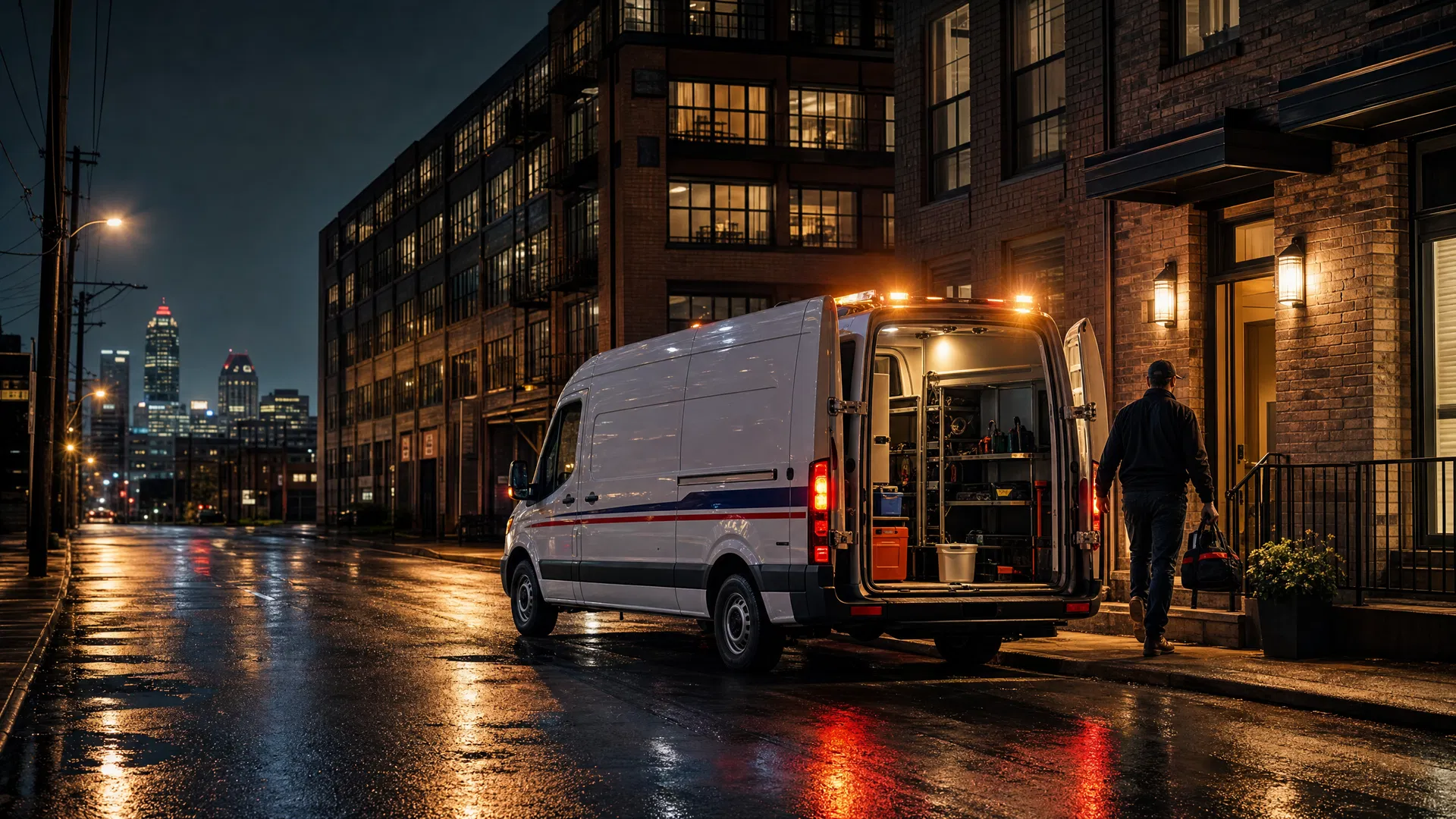
Emergency HVAC for Columbus Airbnb & STR Hosts
No AC in a Columbus July or no heat in January with guests on-site is a habitability emergency. 614 Dispatch triages HVAC failures the same day — resolving what's fixable without a licensed tech, and connecting you to one immediately when it isn't.
No AC
A property above 80°F with guests is an immediate complaint and likely a full refund request. Columbus summers regularly hit 90°F+. Guests booked expecting air conditioning — a broken AC is a material failure of the listing.
No Heat
Below 55°F inside a property is a habitability issue that may trigger an Airbnb EC policy cancellation at full host penalty. Columbus winters are serious. A furnace failure during a guest stay requires same-day response.
Air Quality / Smell
Burning smell from a forced-air furnace, unusual odors from an HVAC system, or mold smell from a clogged drain pan are safety signals that require immediate triage — not a 'check it out next week' response.
HVAC emergency signals
HVAC failures during guest stays break into predictable patterns based on season and system type. Here's what hosts are dealing with when they call us.
No AC — Summer Calls
- Thermostat set to cool, fan runs but no cold air coming out
- AC unit outside running but house temperature climbing
- AC turns on for a few minutes then shuts off repeatedly
- Ice forming on the indoor unit or refrigerant lines
- Guest reports 'sweating and can't sleep' after midnight
- Circuit breaker for the AC trips repeatedly
- Condensate drain overflow — water dripping from ceiling or air handler
- Thermostat blank screen or unresponsive
No Heat — Winter Calls
- Thermostat set to heat, system cycles but no warm air
- Furnace clicks but doesn't ignite
- Heat on for 10 minutes then shuts down — limit switch tripping
- Error code flashing on furnace control board
- Pilot light out on older gas furnace
- Condensate pump failure on high-efficiency furnace
- Electric baseboard or mini-split not responding
- Guest reports indoor temperature dropping below 60°F
What to do right now
These steps resolve a meaningful portion of HVAC calls before a technician is needed. Run through them quickly — they also give us critical information when you do call.
Check the air filter
A severely clogged filter is the single most common cause of HVAC failure in STRs — and the easiest to fix. A blocked filter starves the system of airflow, causes the evaporator coil to freeze (no cool air) or the furnace heat exchanger to overheat and trip (no warm air). Pull it out and hold it to light. If you can't see through it, that's your problem.
Check the circuit breaker
AC systems use two breakers: one for the air handler inside and one for the condenser outside. Both need to be on. For furnaces, check that the dedicated circuit hasn't tripped. Flip the tripped breaker fully off, then back on. If it trips again immediately, stop — there's a short that needs a technician.
Check the thermostat setting and batteries
Verify the thermostat is set to the correct mode (COOL in summer, HEAT in winter), the fan is set to AUTO not ON, and the set point is below the current room temperature for cooling (or above for heating). Dead thermostat batteries cause a blank screen — replace them first before assuming the system failed.
Check the condensate drain line
High-efficiency AC systems and furnaces produce water as a byproduct. The condensate drain line carries this water away. When it clogs with algae, the system has a float switch that shuts it down. Locate the condensate drain pan under your air handler — if it has standing water, that's your shutoff trigger. A wet-vac on the drain line outlet clears most clogs.
For no-heat: check the furnace switch and pilot
Every furnace has a power switch that looks like a light switch, usually on the unit or the wall nearby. Verify it's in the ON position — guests sometimes accidentally flip it. For older furnaces with a standing pilot, the pilot may have gone out. The lighting procedure is on a label inside the furnace door. Do not attempt to relight if you smell gas — leave the property and call the gas company.
Gas smell? Leave immediately.
If there is any gas odor, evacuate the property, do not operate any electrical switches, and call Columbia Gas of Ohio at 1-800-344-4077 from outside the building. Do not call dispatch first — call the gas company.
What we handle vs. what requires a licensed HVAC tech
Most HVAC call-outs that wake up STR hosts don't require a licensed technician. We handle the diagnostic and non-refrigerant work; when it crosses the line, we triage and refer immediately.
614 Dispatch handles these
- Thermostat replacement and programming (all brands)
- Air filter replacement — standard and media filters
- Condensate drain clearing (wet-vac)
- Circuit breaker and disconnect diagnostics
- Condensate pump replacement
- Furnace power switch and pilot light (non-gas-fault situations)
- Mini-split remote programming and reset
- Furnace error code documentation and triage report
- AC capacitor visual inspection (report only)
- Indoor air quality — humidifier/dehumidifier filter service
Requires licensed HVAC tech (we refer)
- Refrigerant handling or recharge (EPA 608 required)
- Compressor or condenser coil replacement
- Gas valve or heat exchanger inspection
- Furnace igniter or gas pressure adjustment
- Electrical wiring inside the air handler or furnace
- Ductwork sealing or replacement
- Any work requiring an HVAC permit
- Combustion analysis
For out-of-scope work, we document the triage findings and make an immediate licensed HVAC referral. You get a written report the same day.
Pricing for Emergency HVAC Calls
HVAC triage calls run on the standard dispatch structure. The response tier you need depends on urgency — a guest in 90°F heat with no AC warrants an Emergency Window, not a same-day. Safety Triage applies if the system has a burning smell or gas concern.
Parts and materials
Thermostats, filters, and condensate pumps are billed at cost plus 20%. We carry common thermostat brands on the truck. Specialty parts are quoted before ordering.
Licensed HVAC referral calls
When we determine the work requires a licensed technician, the dispatch fee covers the triage and referral. No additional charge for the written report.
Guest comfort emergencies
No-AC calls above 85°F and no-heat calls below 55°F inside are automatically escalated to Emergency Window or Safety Triage based on severity.
Columbus and surrounding areas
Emergency HVAC triage across the Columbus metro. See the full coverage area for details.
Fast triage, honest scope, licensed referral path.
Same-day HVAC response
Standard HVAC contractors schedule days out. For a guest in a 90°F property at 3 PM on a Friday, 'next Tuesday' is not an answer. We triage the same day and resolve what's fixable without refrigerant work.
Habitability assessment
For no-heat or extreme no-AC situations, we assess whether the property is habitable for the remainder of the guest's stay. You get a written determination — useful for Airbnb EC policy decisions and refund conversations with guests.
No false scope expansion
We don't attempt refrigerant or combustion work. Some services will try anything to avoid a referral. We identify the line and refer immediately — which protects you from unlicensed work on permitted systems.
Calendar-aware dispatch
Host Priority members have their calendar synced to our dispatch profile. An imminent check-in on a day with a weather alert gets flagged for preventive filter-check scheduling.
FAQ — Emergency HVAC
Do you send a licensed HVAC technician?
For HVAC triage and non-refrigerant work — thermostat replacement, filter changes, circuit breaker resets, condensate drain clearing, and basic diagnostics — we send a skilled handyman. When we identify work that requires an EPA 608 licensed technician (refrigerant handling, compressor work, furnace heat exchanger inspection), we provide a triage report and make the licensed referral immediately. We do not attempt refrigerant or furnace combustion work.
How fast can you respond to a no-AC call in summer?
Same-day response is our standard. Columbus summers with guests in a 90°F property create an urgent guest experience problem and can be a habitability issue. We prioritize no-AC calls with guests on-site. Emergency Window dispatch (within 4 hours) is available for acute situations.
What's the most common reason AC stops working?
In order of frequency for Columbus STRs: tripped circuit breaker, clogged condensate drain line (triggers a float switch shutoff), dirty air filter causing the unit to freeze up, thermostat in the wrong mode or set point, and refrigerant leak (requires licensed tech). The first four are diagnosable and often resolved on-site without a licensed HVAC contractor.
Can guests stay in the property while you work on the HVAC?
For thermostat, filter, and breaker work — yes, guests can typically remain on-site. If the system needs to be powered down for condensate line work or if we're waiting for a licensed contractor on a refrigerant issue, we advise you on the guest situation. A no-heat call in winter below 55°F inside is a habitability issue and we'd recommend a guest rebooking or alternative accommodation.
What if the AC is working but guests say it's not cooling enough?
This usually points to a dirty filter, undersized system for the temperature outside, or a thermostat set incorrectly. We verify the system is functioning, change the filter if needed, confirm thermostat settings, and document the ambient temperature vs. set point. If the system is operating within normal parameters, we provide a written confirmation of that — useful if the guest pushes for a refund.
Do you handle no-heat calls in winter?
Yes — no-heat in a Columbus winter with guests on-site is a priority-level emergency. We dispatch the same day. Common resolvable causes: tripped furnace limit switch, dirty filter causing furnace shutdown, thermostat battery dead, pilot light out on older units, or condensate pump failure on high-efficiency furnaces. Cracked heat exchanger, gas valve failure, or igniter replacement requires a licensed contractor.
More 614 Dispatch services
Guest Access Rescue
Smart lock failure, keypad reset, and guest lockout. Starting at $190.
Turnover Repair Sprint
Cleaner-found damage and check-in blockers. Starting at $249.
Hot Tub Rescue
Cloudy water, no-heat triage, and chemical rebalance. Starting at $299.
Emergency Plumbing
Burst pipes, active leaks, and guest water-safety issues.
Guests uncomfortable right now? Call dispatch.
For active guest comfort emergencies — no heat, no AC, burning smell — call dispatch directly. The form below is for membership signup and non-emergency onboarding.
Call HVAC Dispatch NowHost onboarding — get on the list